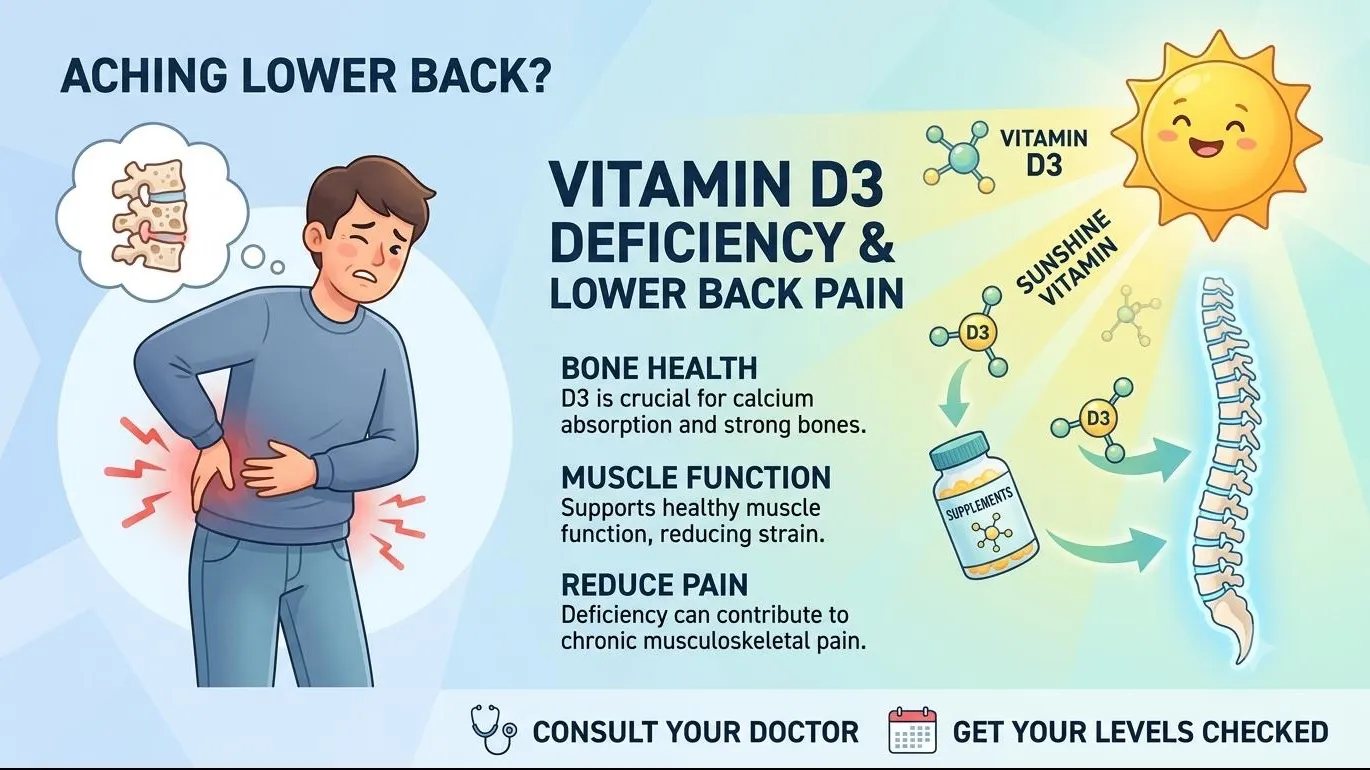
Vitamin D3 deficiency is increasingly recognized as a prevalent, reversible contributor to generalized, non-specific lower back pain. The underlying pathophysiology linking hypovitaminosis D to back pain involves both skeletal and neuromuscular mechanisms:
* Periosteal Nociception (Osteomalacia): Severe deficiency impairs intestinal calcium absorption, triggering secondary hyperparathyroidism. This upregulates osteoclastic activity and disrupts bone mineralization. The resulting uncalcified osteoid matrix hydrates and swells, exerting outward pressure on the highly innervated periosteum. Clinically, this manifests as a deep, dull, and throbbing ache, frequently localized to the lumbar spine, sacrum, and pelvis.
* Skeletal Muscle Myopathy: Vitamin D receptors (VDRs) are heavily expressed in skeletal muscle tissue. A deficiency is associated with the atrophy of Type II (fast-twitch) muscle fibers, leading to paraspinal myopathy and proximal muscle weakness. This muscular deconditioning compromises the dynamic stabilization of the lumbar spine, exacerbating mechanical loading and back pain.
* Inflammatory Modulation: Vitamin D exhibits immunomodulatory effects by suppressing pro-inflammatory cytokines (such as TNF-alpha and IL-6) and enhancing anti-inflammatory pathways. Deficiency can lower the systemic pain threshold and heighten nociceptive sensitivity, contributing to chronic pain states.
Evaluating serum 25(OH)D levels is a highly relevant diagnostic step for patients presenting with chronic, diffuse lower back pain that lacks overt radicular or structural etiology, as targeted supplementation frequently offers significant clinical relief.
Keywords