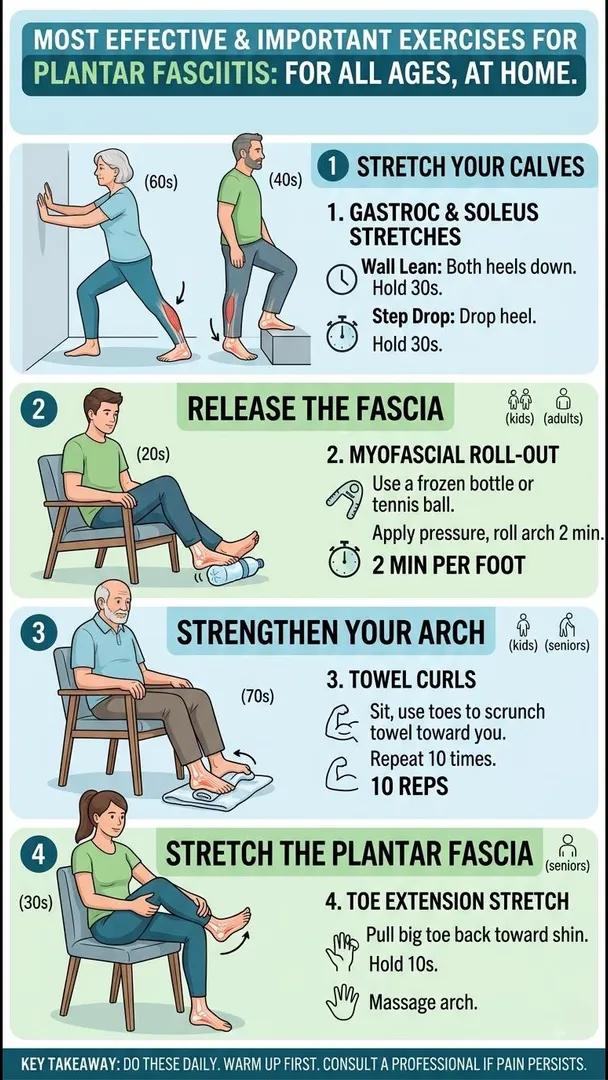
Plantar fasciitis is the inflammation, irritation, or structural degeneration of the plantar fascia—the thick, bowstring-like band of tissue that runs across the bottom of the foot, connecting the heel bone to the toes. It is one of the most common causes of sharp, localized heel pain.
Key Symptoms
* 'First-step' pain: A sharp, stabbing pain in the bottom of the heel that is usually worst during the first few steps in the morning or after prolonged sitting.
* Movement variation: The painoften subsides after walking a bit as the tissue warms up, but it may return after long periods of standing or after (not usually during) exercise.
Common Risk Factors
* Biomechanics: Flat feet (pes planus), high arches (pes cavus), or an abnormal walking pattern.
* Overuse: High-impact activities like running, jumping, or occupations that require standing on hard surfaces for long hours.
* Physical factors: Tight calf muscles, restricted ankle dorsiflexion, or sudden increases in body weight.
Management Strategy
Treatment is typically approached in phases, with the vast majority of cases resolving through conservative measures within 6 to 12 months.
1. Immediate & Conservative Care (First-Line)
* Rest & Ice: Decreasing aggravating activities and rolling the arch of the foot over a frozen water bottle for 15-20 minutes daily.
* Stretching: Targeted stretches for the Achilles tendon, calf muscles (gastrocnemius and soleus), and the plantar fascia itself.
* Footwear & Orthotics: Avoiding walking barefoot, using shoes with thick soles and good arch support, or adding silicone heel cups/custom orthotics to cushion the heel strike.
* Medication: Short-term use of over-the-counter NSAIDs (like ibuprofen) to manage pain and inflammation.
2. Secondary Interventions
* Night Splints: Wearing a brace while sleeping keeps the foot at a 90-degree angle, holding the plantar fascia and Achilles tendon in a lengthened position to prevent morning tightness.
* Physical Therapy: Professional guidance to correct biomechanical imbalances and strengthen lower leg muscles.
* Corticosteroid Injections: Can provide powerful temporary pain relief, though used cautiously as multiple injections increase the risk of plantar fascia rupture or heel fat pad atrophy.
3. Advanced Treatments (Refractory Cases)
* Extracorporeal Shock Wave Therapy (ESWT): Uses sound waves to stimulate healing in the damaged tissue.
* Platelet-Rich Plasma (PRP): Injecting the patient's own concentrated platelets to promote tissue repair.
* Surgery (Plantar Fasciotomy): Releasing a portion of the plantar fascia ligament from the heel bone. This is generally considered a last resort only after 6-12 months of aggressive conservative treatment has failed.
Key Symptoms
* 'First-step' pain: A sharp, stabbing pain in the bottom of the heel that is usually worst during the first few steps in the morning or after prolonged sitting.
* Movement variation: The painoften subsides after walking a bit as the tissue warms up, but it may return after long periods of standing or after (not usually during) exercise.
Common Risk Factors
* Biomechanics: Flat feet (pes planus), high arches (pes cavus), or an abnormal walking pattern.
* Overuse: High-impact activities like running, jumping, or occupations that require standing on hard surfaces for long hours.
* Physical factors: Tight calf muscles, restricted ankle dorsiflexion, or sudden increases in body weight.
Management Strategy
Treatment is typically approached in phases, with the vast majority of cases resolving through conservative measures within 6 to 12 months.
1. Immediate & Conservative Care (First-Line)
* Rest & Ice: Decreasing aggravating activities and rolling the arch of the foot over a frozen water bottle for 15-20 minutes daily.
* Stretching: Targeted stretches for the Achilles tendon, calf muscles (gastrocnemius and soleus), and the plantar fascia itself.
* Footwear & Orthotics: Avoiding walking barefoot, using shoes with thick soles and good arch support, or adding silicone heel cups/custom orthotics to cushion the heel strike.
* Medication: Short-term use of over-the-counter NSAIDs (like ibuprofen) to manage pain and inflammation.
2. Secondary Interventions
* Night Splints: Wearing a brace while sleeping keeps the foot at a 90-degree angle, holding the plantar fascia and Achilles tendon in a lengthened position to prevent morning tightness.
* Physical Therapy: Professional guidance to correct biomechanical imbalances and strengthen lower leg muscles.
* Corticosteroid Injections: Can provide powerful temporary pain relief, though used cautiously as multiple injections increase the risk of plantar fascia rupture or heel fat pad atrophy.
3. Advanced Treatments (Refractory Cases)
* Extracorporeal Shock Wave Therapy (ESWT): Uses sound waves to stimulate healing in the damaged tissue.
* Platelet-Rich Plasma (PRP): Injecting the patient's own concentrated platelets to promote tissue repair.
* Surgery (Plantar Fasciotomy): Releasing a portion of the plantar fascia ligament from the heel bone. This is generally considered a last resort only after 6-12 months of aggressive conservative treatment has failed.
Keywords